
Veterinary Rehabilitation & Animal Care
- PETE
- Mar 25
- 5 min read
A new wave of women specialists and entrepreneurs bridging the gap between human expertise and animal care has emerged in across the world. India has not stayed behind in this new wave. Asawari Joshi & Priyanka Paliwal transitioned from established technical careers of engineering and physiotherapy respectively, after being moved by the plight of paralyzed or injured dogs. A striking commonality is their commitment to tailor-made solutions over mass-produced alternatives.
Pet Assist - Engineering Independence for Injured Dogs
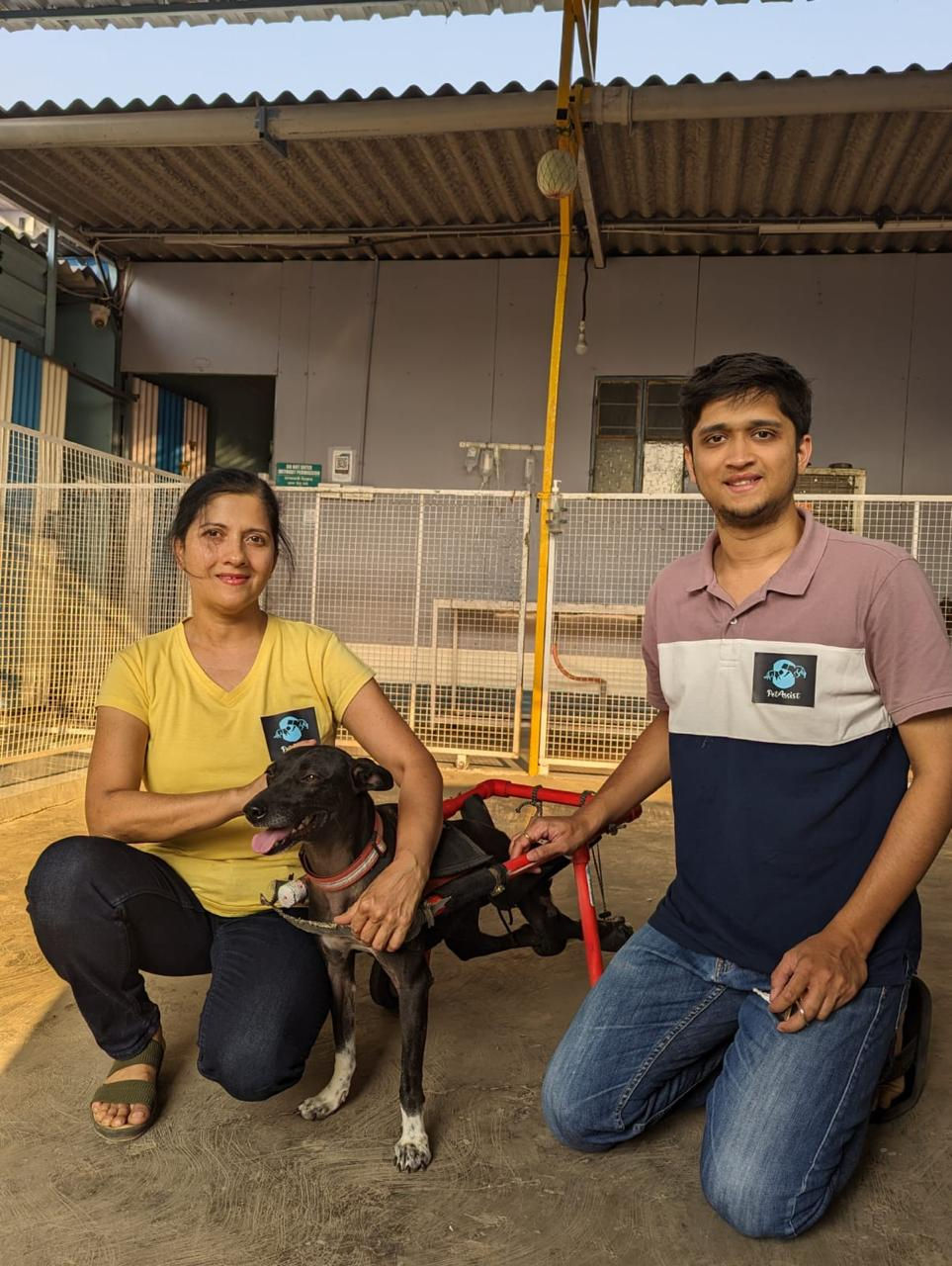
For many, a career shift from the high-octane world of information technology to a home-based workshop might seem like a step back. But for 55-year-old Pune-based entrepreneur Asawari Joshi, this transition was a journey toward noble intentions and profound purpose. As the founder of Pet Assist, Asawari has applied her background in mechanical and computer engineering to redefine pet mobility in India.
An Unlikely Mentor named Murli
Asawari’s path into the pet industry was entirely unexpected. A former IT company owner, she admits she was never fond of dogs and was initially strictly against her son Ajinkya bringing home an injured, unvaccinated stray named Murli. Murli had been run over by a car, his hind bone protruding from a severe wound.
However, witnessing Murli’s resilience and her son's overflowing love began a personal transformation. As she stepped in to become the primary caretaker, she watched Murli heal. Her affection towards Murli and dogs in general gradually made her a dedicated pet lover. Today, Murli, the 12-year-old spirited dog serves as the catalyst, supervisor and model for every new innovation at Pet Assist.
Engineering Solutions for Veterinary Medicine
The business idea for Pet Assist took root when a neighbour's aging dog lost the strength to move or even relieve himself. Seeing the family struggle to lift the dog, Asawari and Ajinkya designed a full-body support harness. The result was life-changing: the dog walked effortlessly for the final months of his life, restoring dignity to both the pet and the owners.
Asawari realized that while mobility aids could be imported, they were often standard sizes that didn't fit every dog’s unique needs and were expensive. Drawing on her engineering skills, she committed to producing tailor-made products. Whether it is a specialized wheelchair or a custom brace, every item is designed specifically for the breed and the dog's condition.
A Therapeutic Impact beyond Wheels
Today, Pet Assist has designed 25 unique products that have reached pets all over India. Utilizing her IT expertise, Asawari has built a robust database of veterinarians who recommend her aids to pet parents. The business operates with a dedicated staff of five to six people, ensuring that products are delivered within days of an inquiry.
One of the most significant discoveries in her journey is the use of the aids - they are not just mechanical supports but a therapeutic support. Asawari has seen fully paralyzed dogs regain their posture and alignment through the use of her wheelchairs, eventually recovering their ability to walk independently. Crucially, these tools prevent dogs from falling into aggressive, painful or depressive states by allowing them to regain independence for daily basic needs.

The First Step: From Bipeds to Quadrupeds
Priyanka Paliwal, 31-year-old physiotherapist, was already established in Pune, running a specialized clinic in Erandwane for human neuro and musculoskeletal rehabilitation. However, her professional journey took an unexpected and profound turn when two veterinarians walked into her clinic with a unique request: they were seeking physical therapy for a paralyzed dog. This encounter became the "trigger" that shifted Priyanka’s focus from human clinics to the wagging tails of the animal world.
Priyanka's first animal patient was an adopted dog who had suffered a spinal cord injury in an accident. His owners were desperate; the dog had lost control of his hind limbs and was struggling with incontinence. Drawing on her expertise in human movement, Priyanka collaborated with a prosthetics specialist to create custom hind-limb braces. The success of this case confirmed her liking and fondness for animals, convincing her that with her acquired skills, she could bridge a critical gap in veterinary care.
While the physics of movement and limb loading are similar between species, she learnt that animal anatomy is a world of its own. To blend her noble intention with scientific rigor, she completed a 1.5-year distance learning course in small animal rehabilitation through GlobalTech University in 2024.
Movement as the Ultimate Medicine
Priyanka’s philosophy is simple: movement is the key solution. She believes that while humans often require motivation and rewards, animals are entirely driven by instinct. Once they receive a mechanical push to understand how to mobilize again, their natural internal environment for healing takes over.
Her case files are filled with transformative stories:
The Pug with a Dupatta: A 7-year-old pug suffering from early arthritic changes had stopped moving entirely. Priyanka used a simple dupatta to provide gentle abdominal support, encouraging the dog to use her hind legs again. In just one session, the pug learned to push off her back legs and regained her independence, reducing her need for medication.
The German Shepherd’s Recovery: A German Shepherd with a disk bulge and a weakened leg was able to walk normally after only three weeks of targeted muscle activation exercises.

A Vision for a Compassionate Future
With zero negative reviews and a reputation for durability and comfort, Pet Assist is setting a new standard in the pet ecosystem. Looking ahead, Asawari hopes to expand into prosthetic leg production, continuing her mission to ensure no animal is left immobile. Her story is a testament to the idea that profitability and purpose can coexist.
Today, Priyanka provides these specialized services with minimal fees, often charging only for travel to ensure help is accessible. Her dream is to build a shelter for healthy abandoned pets who are Veterinary, Animal Care, Pet Care, Engineering, Medicinefrequently overlooked by traditional NGOs. Beyond the clinic, Priyanka is a vocal advocate for animal body-language education. She believes that if people learned to read the signs of stray dogs—who often approach out of excitement or a desire for connection—much of the violence against them could be avoided. She reminds her community that these strays often guard our neighborhoods at midnight, contributing to our safety unknowingly.
By applying the physics of movement to the animal world, these women are proving that professional technical skills, when guided by compassion, can provide voiceless creatures a second chance at a dignified life.


Comments